
Announced at #RareShowcase25!
The community has championed its priorities but has known that the second iteration of this key government policy expires in early 2026.


Minister Dalton from the Department of Health and Social Care, who is responsible for rare diseases, made the exciting announcement that the existing framework will be extended by one year across all four home nations to over 150 rare disease advocates at the Manchester Showcase.

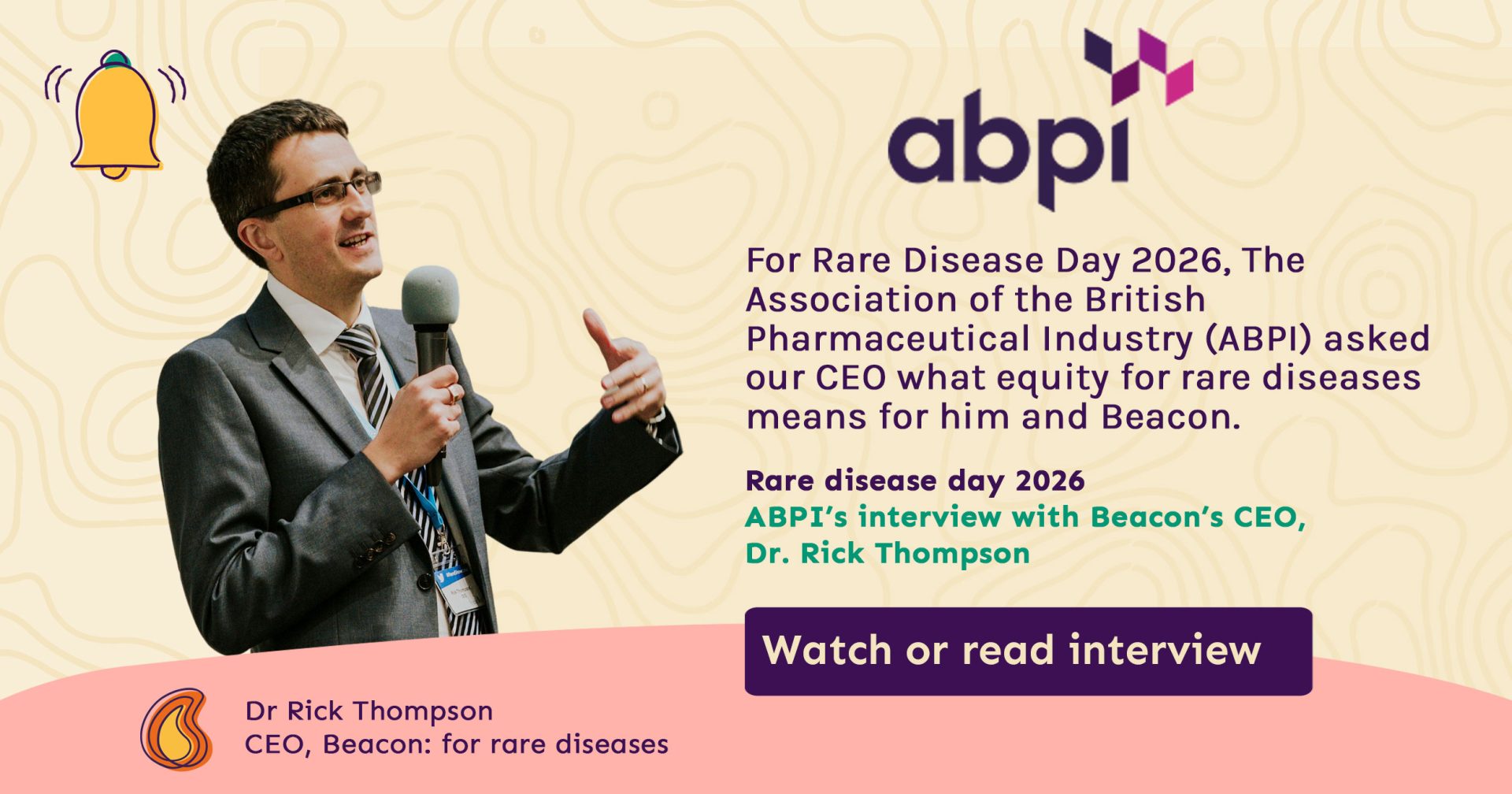
Beacon CEO, Dr Rick Thompson, reflected that:
An active and meaningful framework acts as the cornerstone of engagement between policymakers and our community. Most importantly, this extension buys time for the community and government to come together to ensure the development of a new framework, capable of placing rare diseases at the heart of UK health and life science policy for years to come.
I’d like to highlight the work of our friends at Genetic Alliance UK and collaborators in the Department of Health and Social Care for getting us to this point. Beacon is committed to supporting the next steps of the framework once it ends by ensuring the work of our rare disease patient community is championed and integrated.
The history of the framework
England’s final Action Plan under the current framework will be published in February 2026 to mark Rare Disease Day.

Since England’s first Action Plan, significant progress has been made, such as:
Speed to diagnosis

Awareness of rare diseases with healthcare professionals (HCPs)

Coordination of care

Access to specialist care and treatments

What comes next after the extension of the framework?
As part of her announcement, Minister Dalton asked for the community’s help in shaping the next steps once the current framework ends.
Minister Dalton welcomes proposals from those with lived experience of rare diseases, who are best positioned to know how the system needs to change, as well as government officials from all four nations, regarding what should follow after the framework’s extension by Autumn next year.


Beacon knows that Genetic Alliance UK will be working hard to support the development of this new policy framework for rare diseases. As a member of the Alliance, we are committed to supporting this vital work.
We understand that Genetic Alliance UK will now start work to deliver a major, multi-phased program of community engagement to understand what a future policy for rare conditions in the UK should look like.
Over the coming year, Genetic Alliance UK will work with the rare community to:
- Establish a dedicated steering group to co-produce the engagement strategy
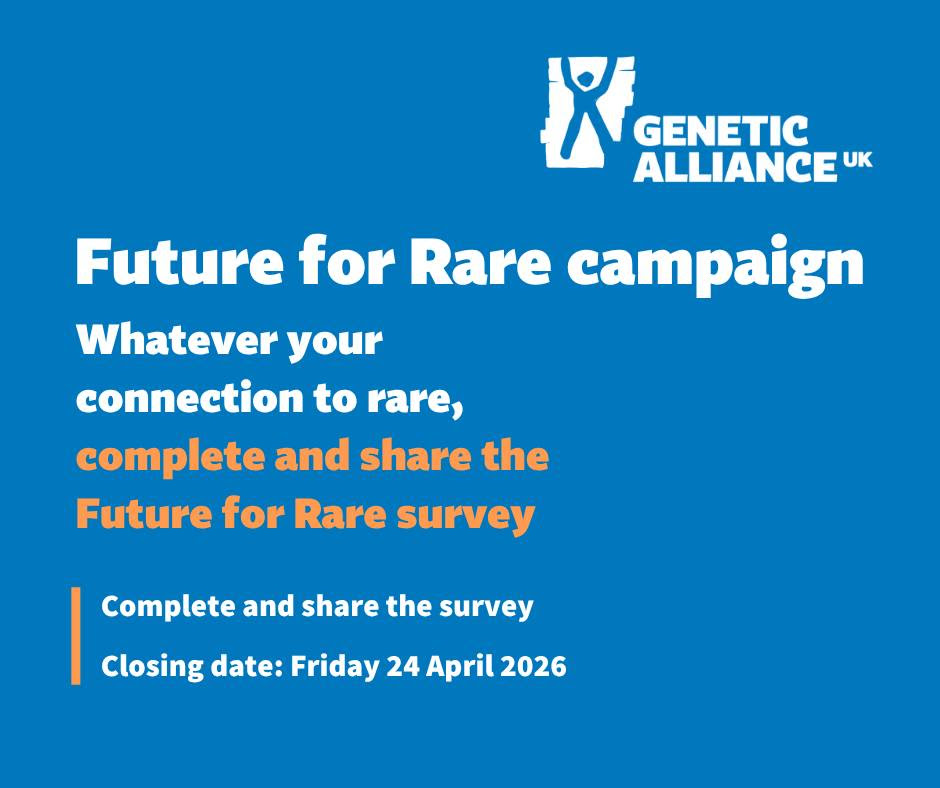
- Launch a UK-wide community survey to understand the most pressing needs of our community
- Create independently led working groups focused on key priority themes (like diagnosis and access) to develop actionable policy options

Genetic Alliance UK will then combine these insights for a multi-stakeholder summit in Autumn 2026 to build consensus on what a future rare conditions policy should look like.

We encourage you to keep an eye out for ways you can get involved in the coming months, as there will be many opportunities to share what you’d like to see once the current framework ends.
If you are new to the rare disease community and would like to learn more about the UK Rare Disease Framework’s background, priorities and underpinning themes, head to the Resources Hub now to enroll in Understanding the UK Rare Disease Framework.