This week saw the release of ABPI’s latest annual report on the state of industry clinical trials, as well as the announcement of a new UK-USA trade deal on pharmaceuticals.
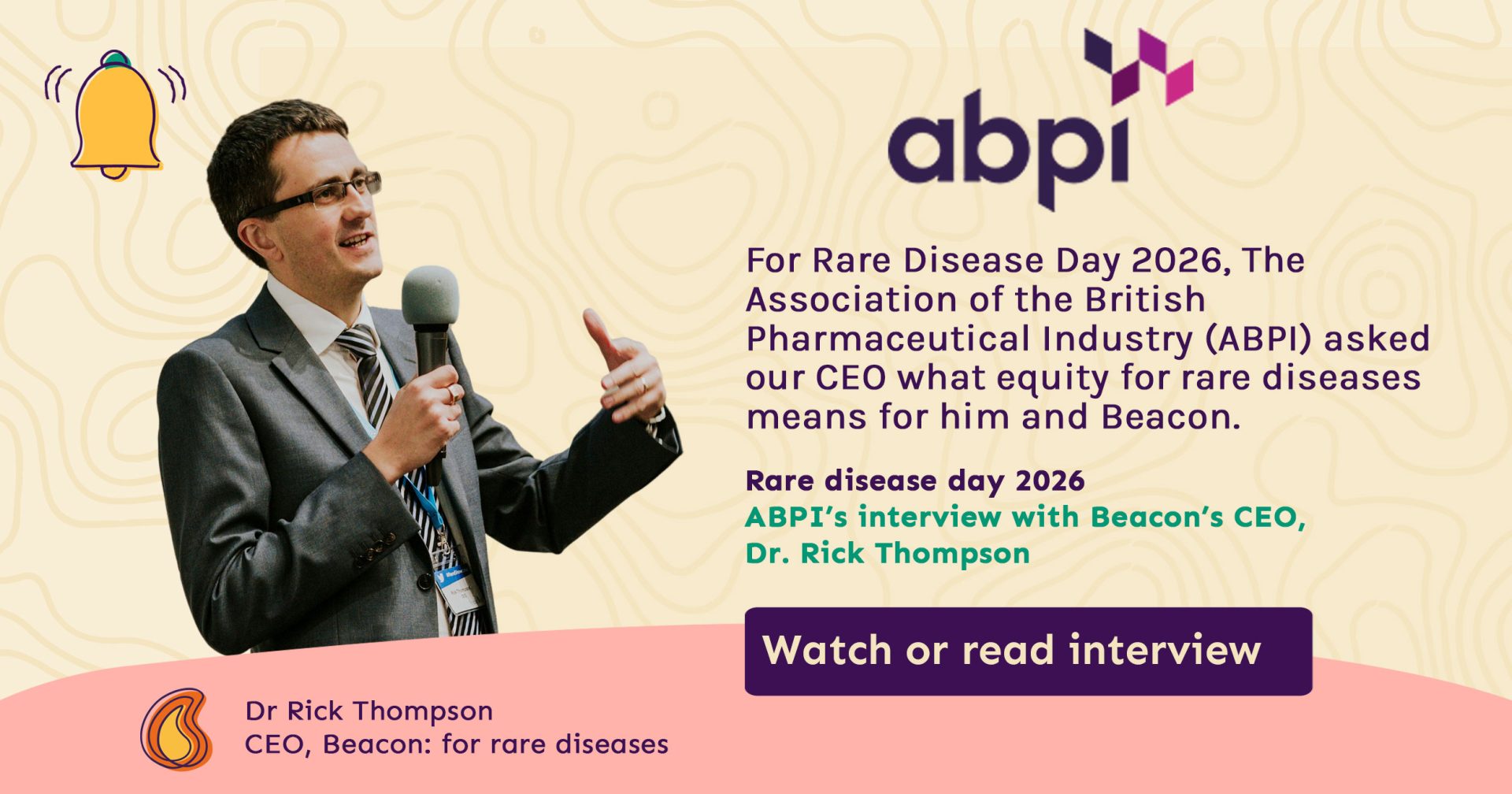
We asked our CEO, Dr Rick Thompson, what he thought the news meant for the rare disease community,
Rick shares:

There are currently encouraging signs for the life sciences and rare diseases – the ABPI have announced a 35% growth in industry trials in the UK – crucial if the UK is to be seen as a leader in the life science industry.
On top of this news that the cost-effectiveness threshold for medicines at NICE will be increased for the first time in 20 years gives hope for improved medicines access for UK patients.
However, the picture remains complex.
The drop in patient participation in industry clinical trials is concerning: successful recruitment is crucial to ensure continued clinical research in the UK, an area where I hope rare diseases can lead the way through patient group collaboration.
Furthermore, the increase in the cost-effectiveness, threshold by £5,000 per annum is unlikely to make a huge difference to the rare disease community where drug costs remain high – though every little helps.
Positive news for the UK life sciences is generally positive for our community, but we need to see a much bigger push on the issues affecting rare diseases in the coming year – the next year, discussing our needs ahead of the expiration of the current rare disease framework will be crucial.

If you missed these announcements, we’ve provided a quick summary of each below with links to read the full statements or report published by the ABPI and the Government.
Quick summary
ABPI State of Industry Clinical Trials Report
In 2024, progress has been made in increasing the number of industry clinical trials initiated in the UK.
There was a 35.7 per cent increase in trial initiations (with 578 trials initiated, up from 426 in 2023).
There was also a rise in UK global competitiveness ranking for phase III trials to sixth place, up from eighth position in 2023.

Patient participation in commercial clinical trials in the UK is at its lowest level since 2017/18, having fallen for the fourth year in a row to 19,092.
Only 3.4 per cent of all trial participants in England in the NHS in 2024/25 were recruited to industry trials.
ABPI makes the following recommendations to help the government improve the environment for delivering industry clinical trials in the UK and redress slow trial set-up times and low numbers of participants recruited:

- Set and meet higher recruitment targets
- Accelerate set-up times
- Executive-level accountability across the NHS
- Demonstrate the impact of the VPAG investment programme funding
UK-USA trade deal on pharmaceuticals

According to the ABPI, Industry hopes the new trade agreement will allow more innovative medicines to reach a greater number of NHS patients and will be a positive step in supporting the UK life sciences industry, which has struggled to compete for investment and research in recent years.

Key information to know:
The agreement between the UK and the US will ensure that UK pharmaceutical exports to the US continue to face 0% tariffs for three years.
The government will ask NICE to increase its baseline threshold from £20,000-£30,000 to £25,000-£35,000, giving NICE the opportunity to approve more new medicines and allowing a greater number of patients to benefit from those medicines.
Did you know?
NICE’s baseline cost-effectiveness threshold has not been increased for over 20 years.
The international average for similar countries to the UK that use either explicit or implicit thresholds is around £33,400, meaning the agreed change brings the UK closer to the average, although it will remain in the lower half of the table.
The UK will reduce the level of repayments on NHS sales required from companies under the Voluntary Scheme for Branded Medicines Pricing and Access (VPAG), which currently requires companies to repay 23.5% of their NHS sales revenues.
The repayment rate for newer medicines in the VPAG scheme will be capped so that it will not exceed 15% for the next three years 2026-2028, with adjustments made to ensure companies do not need to self-fund the changes to the NICE threshold.
Update: 12 December 2025

The government has announced that the 2026 payment rate for newer medicines under the Voluntary Scheme for Branded Medicines Pricing and Access (VPAG) will be 14.5 per cent, down from a record 22.9 per cent in 2025.