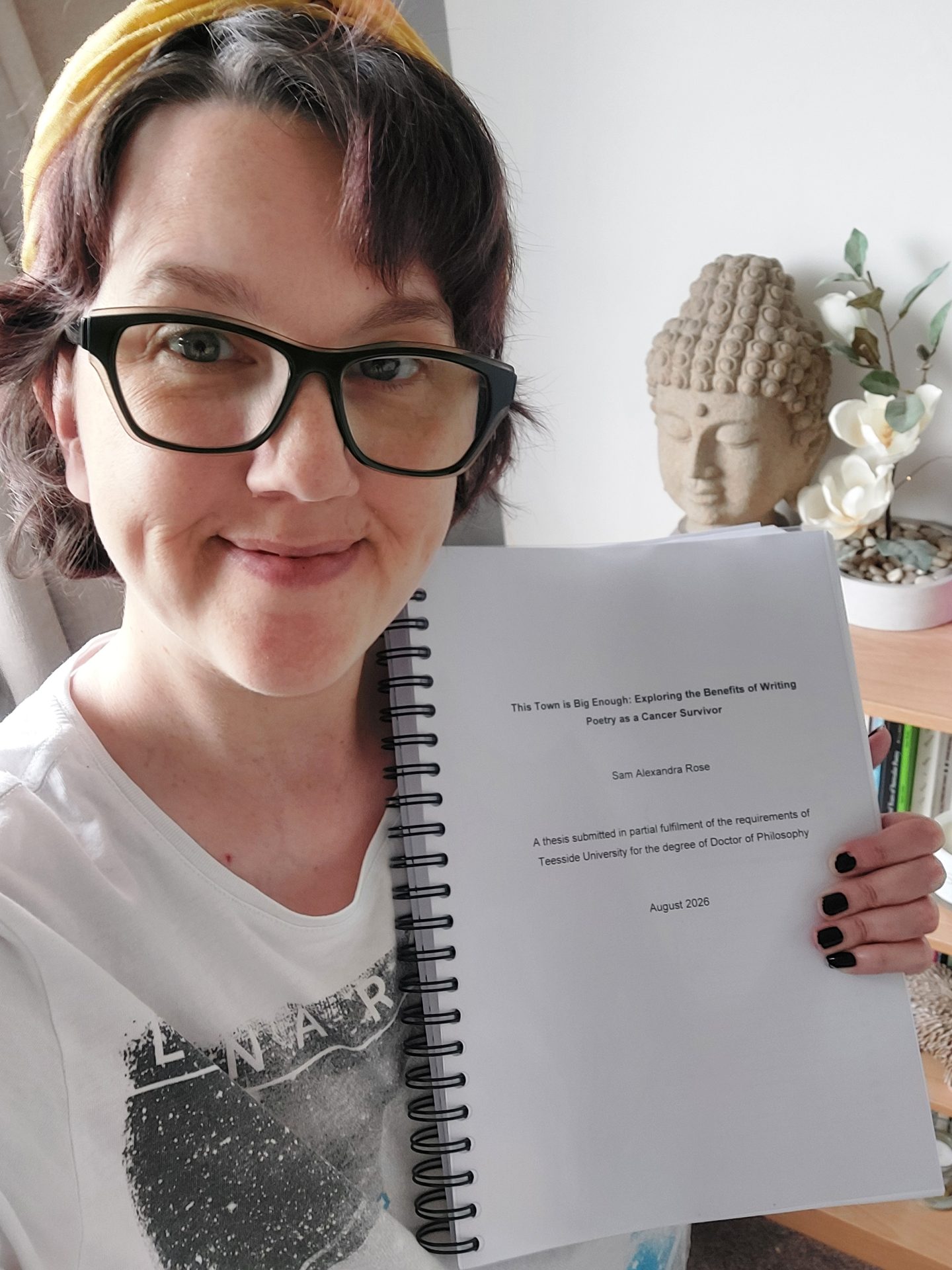
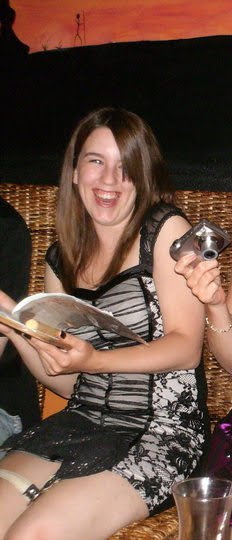
This blog was written by the wonderful Sam, who was diagnosed with CMMRD (constitutional mismatch repair deficiency). They are approaching the completion of their PhD, which studies the benefits of creative writing on people who have cancer.

In 2010, I was diagnosed with bowel cancer. 16 years later, I’ve had four different types of cancer, five operations, and I have at least six scans or invasive tests every single year.
My bowel cancer diagnosis came at the age of just 22, with uterine and duodenal cancer coming along at the same time when I was 30.
At 37, I was diagnosed with breast cancer. I’ve had my bowel removed, a temporary stoma, and after that an internal pouch created.
I’ve had a total hysterectomy and been flung into early menopause.
I had Whipple surgery, which involves removing the duodenum, head of the pancreas, gall bladder and bile duct. I’ve had chemotherapy and radiotherapy for breast cancer, as well as a lumpectomy.
And the reason for so many cancer diagnoses and treatments?
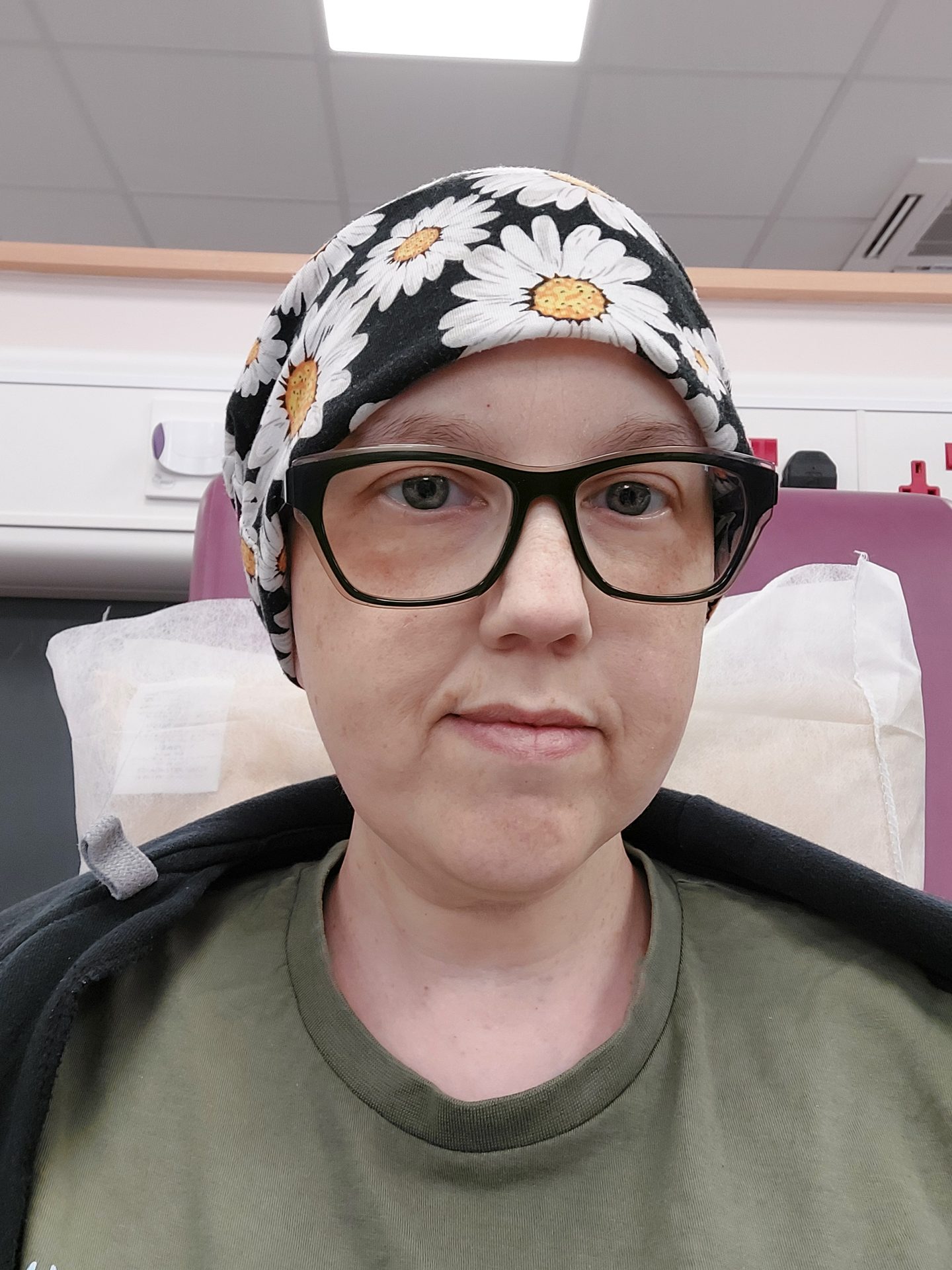
I have CMMRD, or constitutional mismatch repair deficiency.
It’s an inherited condition that greatly increases a person’s risk of getting different types of cancer, including brain tumours, blood cancers, gastrointestinal cancers and more.
It often happens when a child inherits Lynch syndrome from both of their parents, which is another inherited condition that is much more common and increases the risk of bowel cancer, among others.
Because of CMMRD, I have a brain MRI, full body MRI, gastroscopy, capsule endoscopy, flexible sigmoidoscopy, and a mammogram – all of those, every single year. As you can imagine, it’s quite a lot to deal with both physically and emotionally.
Here’s a look at CMMRD in numbers:
This means that families are often devastated by the deaths of children who are affected by CMMRD and develop cancer at such a young age. My family was one of those, as we lost my brother due to a brain tumour when he was just sixteen. I was fourteen months old.
The fact that I turn 40 at the end of 2027 is therefore no small landmark. I am very unlucky but at the same time very lucky. With the above statistics in mind, getting old is absolutely a privilege that shouldn’t be taken for granted.
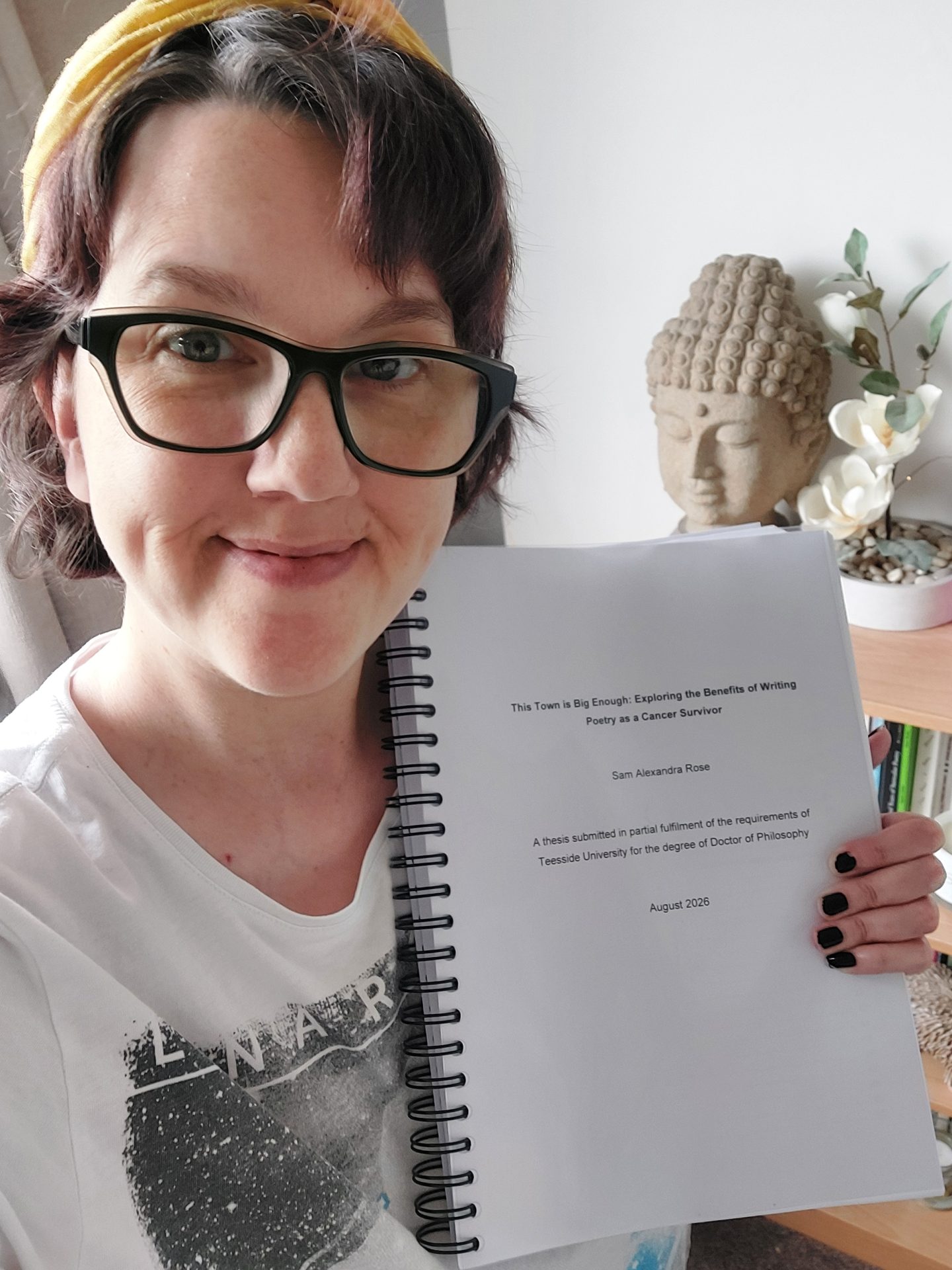
However, before my landmark birthday next year, there is another landmark on the horizon: the completion of my PhD.
After my second and third cancer diagnoses in 2018, I decided to begin a creative writing PhD.
Living with CMMRD comes with a huge amount of anxiety, fear of recurrence, distrust of my body, grief, and other emotional effects of cancer survivorship that I was never warned about. So when I was choosing my area of study, it was only natural to decide to write poetry about those emotional effects.
My research is practice-led, which means the act of writing creatively was a large part of my research.
I’ve been a writer my whole life, and I already knew that writing about my illness experiences helped me to process them. I aimed to discover exactly how writing poetry could benefit me as a cancer survivor, in order to help myself and others with similar experiences.
Here are just three things that I found to be helpful during my writing:
1. Exploring other parts of my identity as well as writing about cancer
When I started my PhD, I imagined I would be writing only about cancer for the duration of my studies. However, I had already spent years writing poetry, blog posts, articles, and even two memoirs about my cancer experiences.
I wanted to write about other subjects, but what should I write about? Who else even am I besides a cancer survivor?
Sometimes it’s difficult to tell! It turned out that exploring this question was just as important as writing about cancer itself.
Writing about my childhood, relationships, or even nature, helped cancer to feel like a smaller part of my identity, rather than something that consumed me. I felt more in touch with other parts of myself again.
2. Writing a first draft and then editing my poems further
Of course, in order to finish a poem you have to write a first draft, and then continue editing it to give it that final polish – especially if you want to publish it or share it with others.
My research found that both writing that first draft and continuing to edit provided me with different benefits.
Drafting gave me that initial feeling of release and catharsis, and was often the most enjoyable part as I experimented with different writing techniques.
Meanwhile, editing my poems helped me to explore my feelings further: what is it that I really want to say, and how do I best convey this to a reader?

Not only was it very satisfying to think that someone else may understand my experiences better after reading my poem, but editing also gave me some distance from my feelings that was helpful – instead of wallowing in sadness or fear, I was concentrating on crafting the best poem I could.
3. Finding my own language and metaphors to explain my experiences
While I didn’t set out to challenge any common language often used to describe cancer, I found that I naturally gravitated towards this.
Like many people who have had cancer, I dislike the war and battle language around the disease. I also don’t feel like a strong hero or a helpless victim, so I don’t relate to how cancer is often spoken about in the media.
Writing poetry helped me to find a middle ground among all of these metaphors, and it was both enjoyable and meaningful to create my own metaphors to describe what having CMMRD is like for me.
I’m excited for my research and my writing to reach a wide audience – I really hope that it might encourage other people to try writing about their illness experiences, discover their own benefits, and unlock new stories and conversations.
I’ll be sharing more about this research, and also releasing my poetry book in the coming months. I’ve set up a newsletter for anyone who would like to be updated on the book and find out more about my research.

It’s not easy balancing CMMRD with other parts of my life. With completing my PhD, working for a medical research charity, and all of my other writing projects, it does seem like cancer takes up a lot of my thoughts and my time.
However, if I can raise awareness of CMMRD, help people to better understand cancer survivorship, and encourage them to experience the benefits of creative writing themselves, it’s always worth telling my stories.