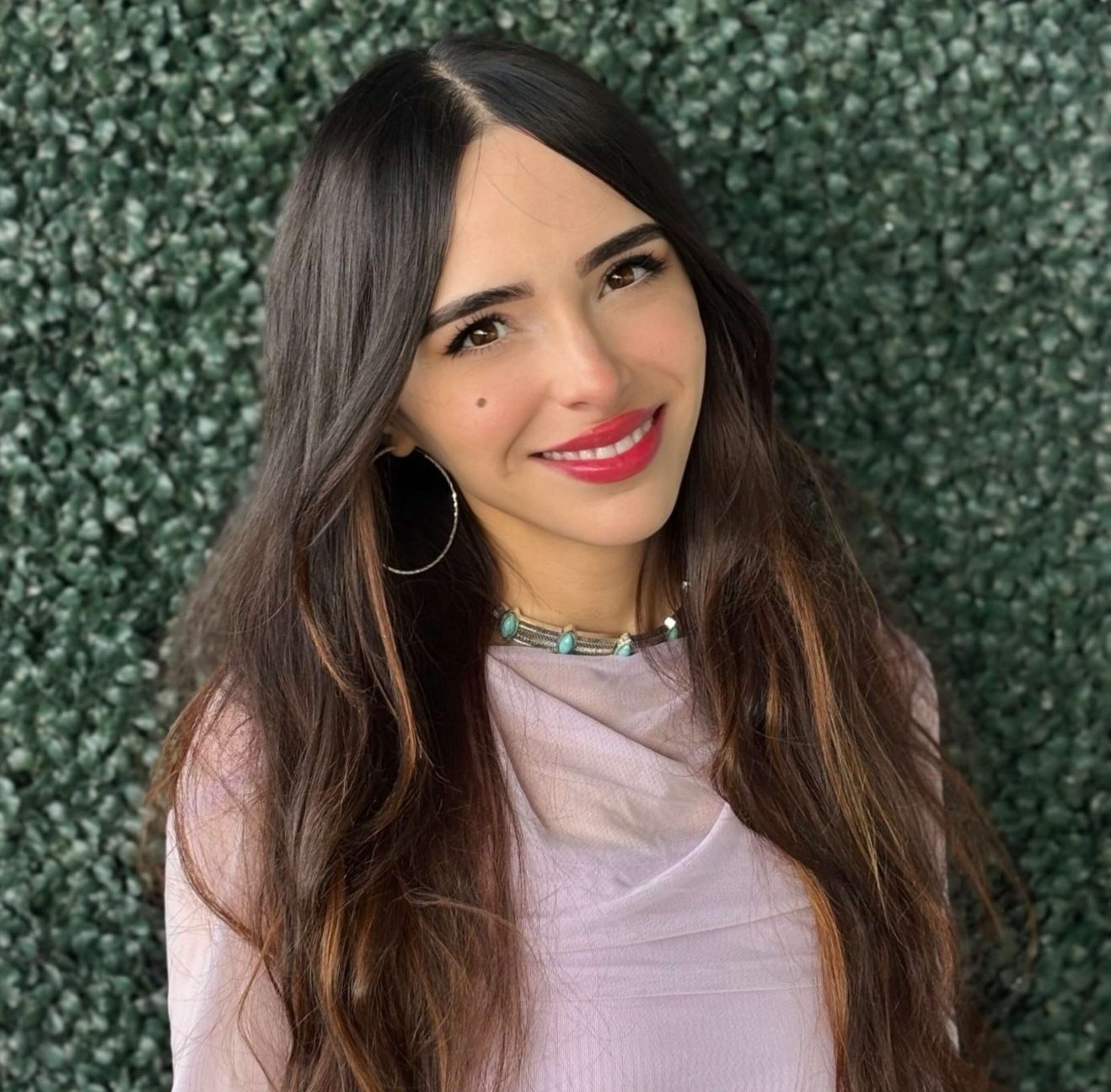
Our latest blog is written by Sierra Domb, the CEO & Founder of the Visual Snow Initiative (VSI).
After years of navigating chronic pain, invisible illness and a healthcare system with limited answers, the onset of Visual Snow Syndrome became a turning point that transformed fear and isolation into action. Through resilience and determination, Sierra founded the Visual Snow Initiative (VSI) and has worked globally to raise awareness, advance research and support underserved patient communities.
Explore Sierra’s story of living with Visual Snow Syndrome, Erythromelalgia, and Autoimmune Dysregulation, and how learn how her experiences shaped her advocacy work.
Transforming personal challenges into global impact
Hi! I’m Sierra Domb. I spent much of my adolescence trying to hide, adapt, and manage my unique health conditions, navigating a world with limited resources and understanding.
Everything shifted when another debilitating condition emerged, one that the medical community knew almost nothing about and for which I was told there was nothing that could be done.
The compounded effects of multiple conditions created challenges I could no longer ignore, and in facing them I realized I was not alone. Countless others were similarly affected, their physical and mental health often overlooked or dismissed. This awareness became the catalyst for my medical advocacy and humanitarian work.
You never know what you’re capable of until you give yourself permission to try or until life forces you.
This realization has guided my journey, shaping not only how I live with Visual Snow Syndrome, Erythromelalgia, and Autoimmune Dysregulation, but also how I strive to use my experiences to improve awareness, advance understanding, and support others facing rare and complex health challenges.
Understanding Erythromelalgia and Autoimmune Dysregulation
Childhood marked the beginning of my journey with Erythromelalgia (EM) and Autoimmune Dysregulation (AD).
Erythromelalgia (EM) is a rare neurovascular disorder affecting the blood vessels in the extremities, causing episodes of burning pain, swelling, redness, and heightened blood flow, often brought on by heat, activity, or stress.
Autoimmune Dysregulation (AD) occurs when the immune system malfunctions, attacking the body’s own tissues and creating systemic inflammation and immune-related complications.
Living with these conditions requires constant vigilance and a clear understanding of how daily habits, environments, and stressors impact health.
This includes managing temperature extremes, avoiding infections, anticipating flares, and balancing physical limitations with school or work.
Beyond these practical demands, EM and AD bring profound physical discomfort, emotional challenges, and the stress of navigating a healthcare system that often leaves patients with rare conditions, including pediatric patients, facing long waits, high medical costs when insurance provides limited or no coverage, and a scarcity of treatments and resources.

Cushing’s Syndrome and the complexity of visible and invisible illness
Developing Cushing’s Syndrome as a side effect of medication added both physical discomfort and social challenges, further highlighting visible symptoms like swelling and redness. Other symptoms, including pain and fatigue, were invisible but equally impactful.


This gap between how I felt and how I appeared often led to misunderstanding and insensitivity.
When I looked “normal”, others assumed I could function without limitation, intensifying the struggle between meeting expectations and honoring my body’s needs.
For years, I tried to keep pace with school, work, and social life while concealing my reality.
Even well-meaning doctors noted how unusual my symptoms were in someone so young, unintentionally deepening my isolation.
I simply wanted to belong and hide my differences.
Visual Snow Syndrome: When symptoms outpaced clinical understanding
At 21, the onset of Visual Snow Syndrome (VSS) shifted my perspective.
Visual Snow Syndrome, or VSS, is a neurological condition that impacts vision, sensory processing, and overall quality of life.
It creates persistent visual “static” or “snow” across the visual field, along with afterimages, distortions, extreme light sensitivity, sensory hypersensitivity, derealization, tinnitus, and other debilitating symptoms.

See what sight with Visual Snow looks like.
The arrival of VSS forced me to confront a medical community that had virtually no understanding or resources, where many had never heard of the condition and questioned the reality of my experiences.
Several physicians suggested that I might face permanent blindness or a life-threatening neurological disorder, yet provided no diagnostic certainty or clear answers.
The lack of knowledge and reassurance left me confronting profound fear and uncertainty at an already vulnerable time.

Choosing action in the face of health struggles
Growing up, I didn’t know anyone else with EM or AD.
After developing VSS, research helped me see how many others were navigating similarly underserved conditions. I realized that acceptance and openness about my health were not signs of weakness, but the foundation for advocacy.

From that point, I committed to using my experiences to improve systems of care, elevate awareness, challenge stigma around marginalized medical conditions, strengthen physician-patient communication, and advocate for accessibility, recognition, and research for underserved patient populations.
My work began with VSS and has expanded to broader humanitarian initiatives addressing the mental health impact of physical symptoms, chronic illness, women’s health, and overlooked but vital areas of neuroscience, including neurotransmitters and homeostasis.
Driving awareness, research, resources, and improved care
At 23, I founded the Visual Snow Initiative (VSI), a global nonprofit dedicated to advancing awareness, education, recognition, resources, and research for Visual Snow Syndrome.
I shared the story of this journey and how personal struggles can drive positive change in my TEDx talk, “What Is Visual Snow? Transforming Anguish into Action”.
Serving on the International Advisory Board for the Columbia-WHO Center for Global Mental Health has given me the opportunity to address stigma and advocate for improved healthcare and mental health support for rare conditions and neurological disorders with severe symptoms, particularly in under-resourced regions.
I have also joined the Erythromelalgia Association (TEA) as a member and contributed as a guest speaker and author, sharing insights and experiences to support the community and raise awareness for this often-overlooked rare condition.

The complex journey of advocacy amid health challenges
Being an advocate while managing chronic conditions comes with challenges. Advocacy can bring up difficult reminders of past experiences and situations that intensify physical or emotional strain.
During times of illness, medical procedures, or personal hardships, I continued managing the responsibilities of running a nonprofit, motivated by the opportunity to help others.
Advocacy is rewarding, but it can also increase stress and affect health. Feeling unwell while handling important responsibilities is not unique to advocacy. Millions of people navigate serious challenges every day just to complete school, work, daily tasks, or simply get through the day, including those with rare and chronic conditions. Each person’s way of coping and finding hope is different, just as our health and perspective may be.
On top of medical hardships, advocacy can expose you to life’s harsher realities, including misunderstanding, gaps in systems, disorganization, insensitivity, ignorance, and resistance to change.
You may not be able to fix everything, but you can act where possible, contribute your efforts, and help create positive change.
I chose this path as a way to cope with difficult experiences, and advocacy has become a way to process medical trauma while advancing awareness, research, and resources.
I’m grateful for the opportunity to make a difference, though my ability to continue depends on my health.
Advancing progress, especially in areas where little has been done before, is a lofty goal, but substantive change begins with effort, and no progress is possible without someone taking the first step. There may come a time when stepping back due to my health is necessary, and I accept that uncertainty.
For as long as I am able, I will continue to do my best, balancing self-care with the work I am passionate about and striving to make a positive impact whenever possible.
Your unique journey, your resilience
Living with rare or chronic conditions can feel isolating, especially when our experiences, appearances, or abilities fall outside society’s narrow definitions of “normal”, and when we must navigate systems not designed with us in mind.
Yet millions of people around the world face similar challenges, and within this shared experience of struggle, resilience, and understanding lies connection.
For some, the focus is simply on enduring and making it through the day.
For others, experience becomes a catalyst for advocacy and change.
Both are valid, and both are victories.
In a world that can feel unforgiving and isolating, it is important to be gentle with yourself and recognize the strength it takes to keep going.
Whether advancing global awareness or finding pride in having faced a single difficult day, your resilience and compassion matter.
Honor your progress, however it looks, and offer yourself the same kindness you would extend to another person facing similar challenges.