I watch someone I love be imprisoned in their own body. Stiff Person Syndrome isn’t just “stiffness”
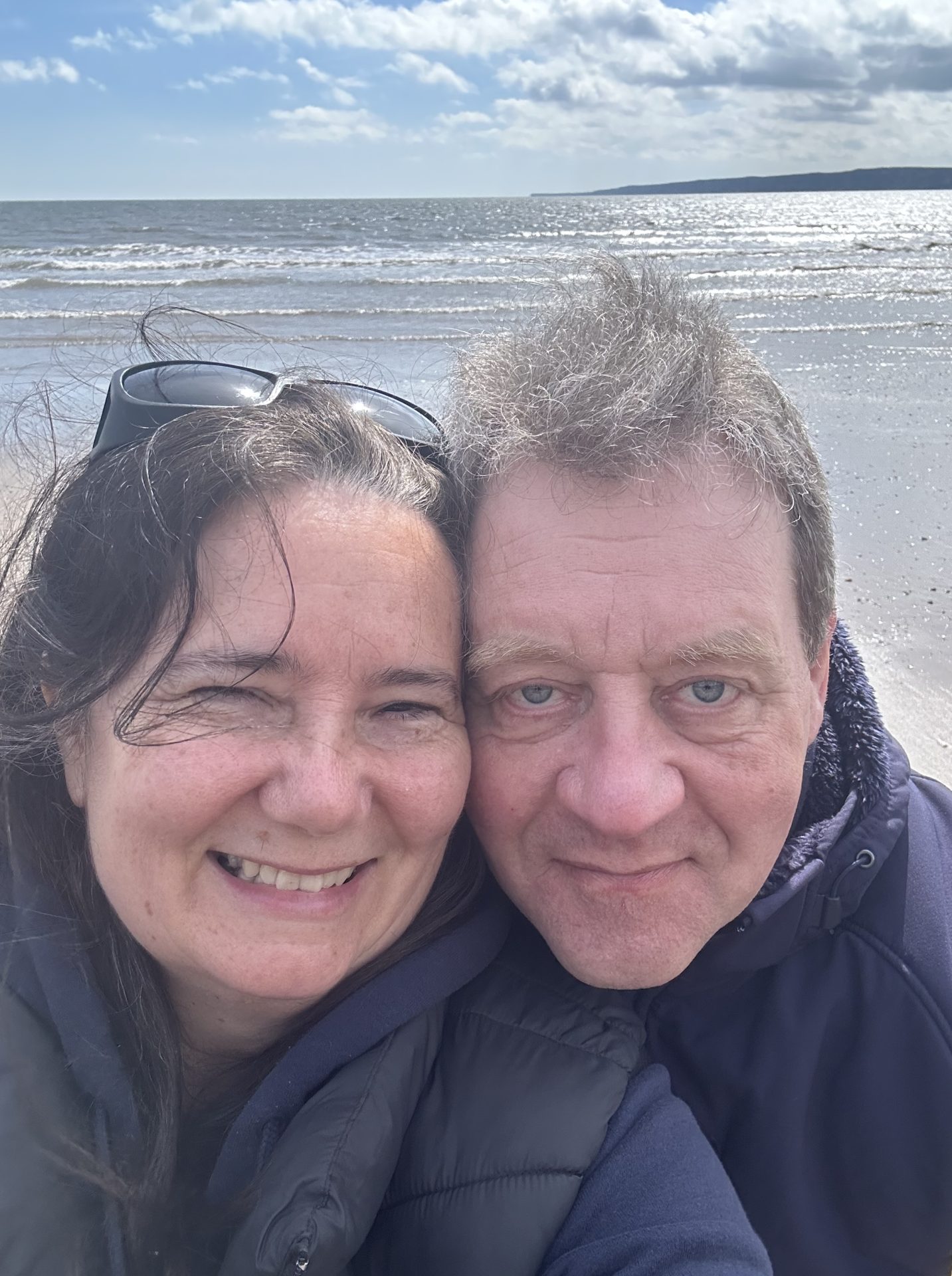
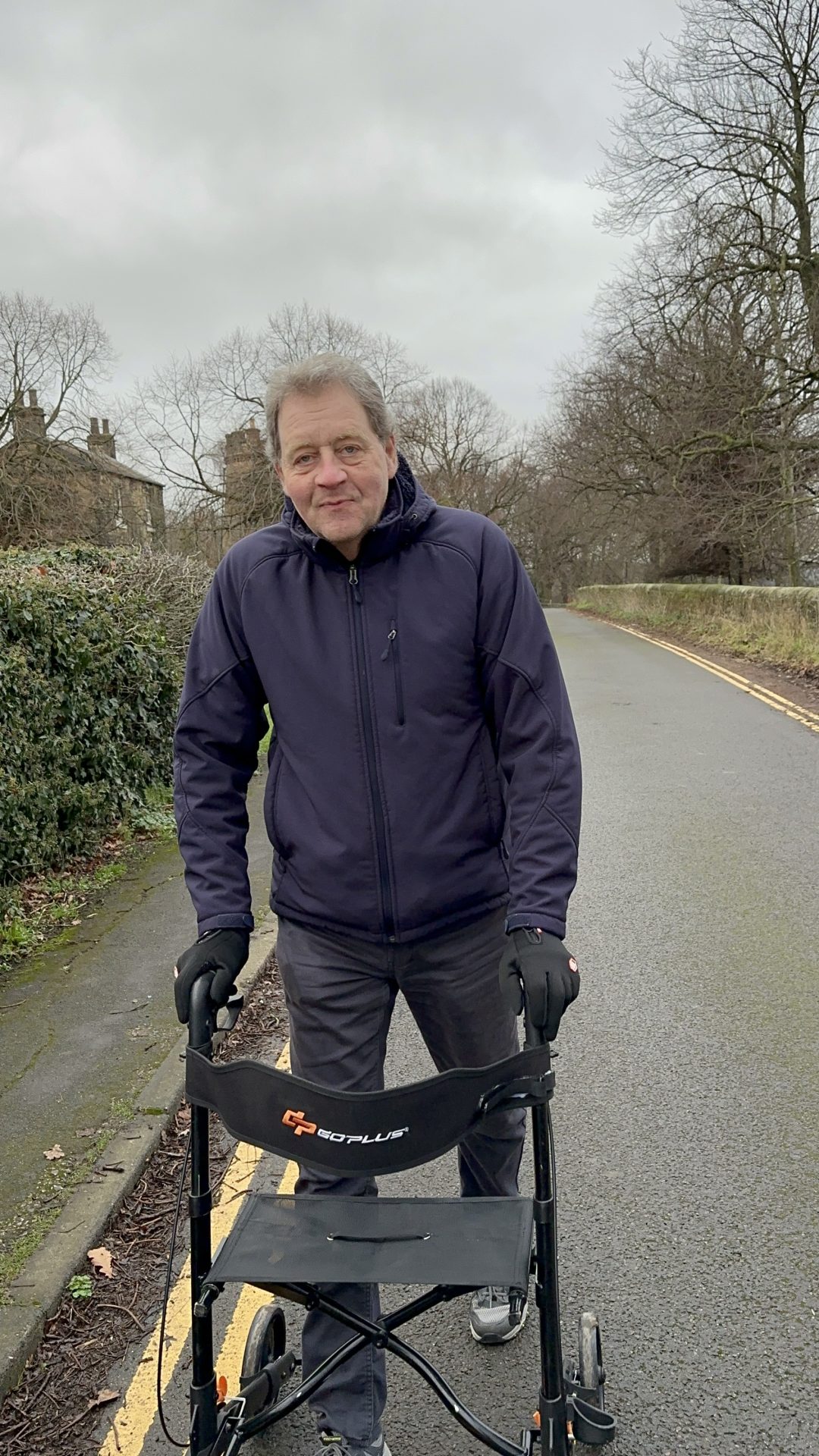
This week’s blog is from Andrea, whose husband Ian lives with Stiff Person Syndrome (SPS). She shares their experience of living with the rare condition, and calls for a group effort to improve the lives of those with SPS.

Ian’s experience of Stiff Person Syndrome
After the spasm the body locks again. Rigid, unyielding, incapable of responding. They can’t move. Cannot speak. Cannot even open their eyes and when they eventually open their eyes their eyes can be locked in place unable to move up, down, side to side so it affects vision too. I have to watch in complete silence. Watching their helplessness.
It becomes an inconvenience to people and this makes me want to scream at the cruelty of this disease. At the silence that allows it to go ignored. At the people who think that survival is enough. It’s not. It’s a war in a body that becomes a battlefield betraying the person within.
For Ian, it’s taken many steps on a pathway strewn with difficulties. We’ve had ambulance crews turn up who have never heard of the disease and don’t have a clue how to approach him.
Hospitals are hazardous environments and unfortunately the professionals who are to administer the infusions lack experience. An SPS body triggers at touch, movement, temperature changes and sudden noises.
Turbulent treatment experiences
He is due to have more chemotherapy soon and several years in, it will mean telephoning ahead to check he has a bed booked and you can bet on arrival they will want to know why he’s needing a bed? He ended up having the treatment on a bed in a store cupboard one time. Another treatment he attempted a few years ago caused a rapid decline in his condition. It’s a risk you take.

He was merely told that some of his symptoms would be due to the fact he has Stiff Person Syndrome. He had had symptoms for over 30 years with many different diagnoses yet he wasn’t told of his diagnosis when it was added to his patient file.
He had been a patient at that hospital for over 20 years. When did they diagnose this? We don’t know!
Raising awareness
On one of the occasions his lungs were squeezed and his throat had closed off with the spasms and we had to call the emergency services. This was a catalyst that made us reach out to try and alert medical professionals about this condition, to improve their understanding and we set out to raise awareness on social media.
Little by little I contacted people diagnosed and asked them if they would be willing to come onboard and help us to raise awareness of this brutal, catastrophic condition.

I wanted to make a point that yes it’s a one in a million diagnosis but there are over eight billion people in the world and now after creating reels to improve awareness over the last few years I have around 20 plus people who have sent photos or short videos to become part of the reels or to try and give informative posts on my platform to help people understand their condition.
We are in contact with people from the UK, France, Spain, USA, Brazil, Australia, Lebanon, Norway, Canada, Turkey, Finland, India, Netherlands and Sweden and it’s been very encouraging.
Due to the triggers of the disease it is so isolating. People become cut off from their friends, their families and have to live a very secluded life. It’s been reassuring and heartwarming to hear from others that no longer feel they are alone.
So we continue to try and make the invisible visible.
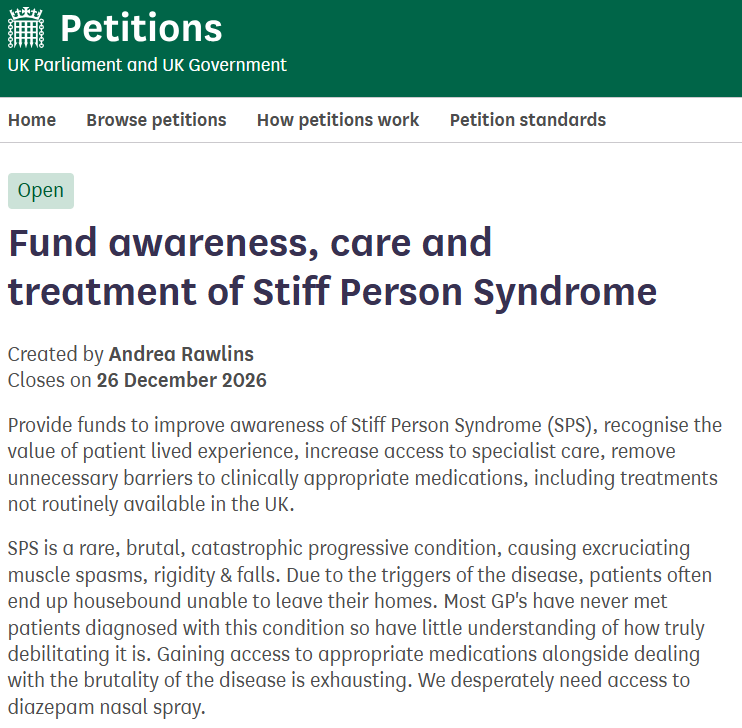
Sign the petition
SPS does not simply affect the muscles of the limbs and trunk. The muscles of the oesophagus and larynx can also go into spasm, making swallowing impossible and significantly increasing the risk of choking or aspiration.
At precisely the moment patients most desperately need medication, oral tablets may no longer be an option. A nasal formulation bypasses swallowing altogether and could help bring prolonged neurological crises under control before they escalate.
During these crises the spasms can involve the muscles responsible for breathing and swallowing, leading to respiratory distress and leaving patients unable to communicate, move or take oral medication.
Some remain trapped in excruciating pain for many hours, requiring emergency intervention, and tragically some do not survive these episodes. We have lost several friends globally to this condition. These realities remain largely unseen and poorly understood.
Living with SPS is therefore far more than coping with muscle stiffness. It is a condition that can strip away independence, dignity and, in some circumstances, threaten life itself.
Our local MP has also written to the Department of Health and Social care in support of our efforts.
We more than anyone, recognise that a signature isn’t simply a name, it’s a voice calling for change, better access to treatment and more research, as well as giving hope to those living with this devastating condition.
Together we can help change lives, one signature at a time.
Watch their story on ITV